Accurate communication is becoming an essential part of business cooperation between India and Japan, particularly in industries where technical precision, documentation and professional coordination are critical. Japanese Translation Services are helping organisations address language barriers when working with Japanese clients, manufacturers, technology providers and business partners.
From machinery specifications to commercial agreements, communication between companies often involves information that must be translated without changing its intended meaning. Even a small terminology error in a technical document can create confusion during equipment installation, manufacturing operations or product handling. This makes subject knowledge and linguistic accuracy important considerations when selecting a translation service.
Technical and commercial documents require specialised expertise
Japanese companies operate across sectors such as automotive manufacturing, electronics, engineering, pharmaceuticals and information technology. Indian organisations collaborating with these businesses may need Japanese translations of technical drawings, product specifications, instruction manuals, quality-control documents, training materials and safety procedures.
Commercial communication presents a different set of requirements. Business proposals, corporate presentations, agreements and correspondence must reflect the intended message while maintaining an appropriate professional tone. Translators must consider the context of the document rather than relying solely on direct word substitution.
Japanese also uses three writing systems hiragana, katakana and kanji alongside language conventions that influence sentence structure and formality. Understanding these features is important when translating specialised or business-related content.
Translation requirements extend beyond industry
Japanese language support is not limited to corporate assignments. Students, professionals and individuals may need translations of academic certificates, employment records, personal documents and immigration-related paperwork.
Official document requirements vary between institutions and authorities. Applicants should confirm whether a certified translation, a specific format or additional authentication is required before submitting documents. Checking these requirements in advance can help prevent avoidable delays.
Companies introducing products or services to Japanese-speaking audiences may also require localisation. This process adapts content to the target audience, taking into account terminology, cultural expectations, formatting and regional communication preferences.
Quality control remains central to reliable translation
A professional translation process may include terminology research, document review, proofreading and consistency checks. For technical assignments, reference materials and approved glossaries can help maintain uniform terminology across multiple documents. Confidentiality procedures are also important when projects involve proprietary information, commercial agreements or personal records.
Translation technology can support terminology management and initial language processing, but the appropriate level of human review depends on the content and its intended use. Documents involving safety instructions, legal obligations or specialised technical information warrant particular care.
Organisations may additionally require Japanese interpretation during supplier visits, factory inspections, business negotiations, training sessions and conferences. Transcription, subtitling and voice-over services can support the adaptation of recorded discussions, presentations and training videos for multilingual audiences.
Meeting the communication needs of international projects
As companies manage cross-border projects, language services can contribute to clearer instructions, more consistent documentation and smoother professional interactions. Defining the target audience, subject area, delivery schedule and quality requirements at the beginning of a project helps establish an appropriate translation workflow.
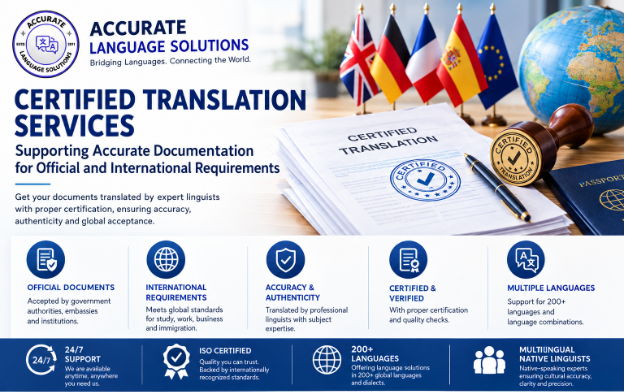
Accurate Language Solutions offers multilingual communication services, including translation, interpretation, transcription and voice-over. Further information is available at https://accuratelangsols.com/.
Japanese translation continues to serve a practical purpose in international business by making technical, commercial and personal information accessible across language boundaries. For organisations working with Japanese-speaking stakeholders, choosing the right translation approach can support accurate communication throughout the project lifecycle.