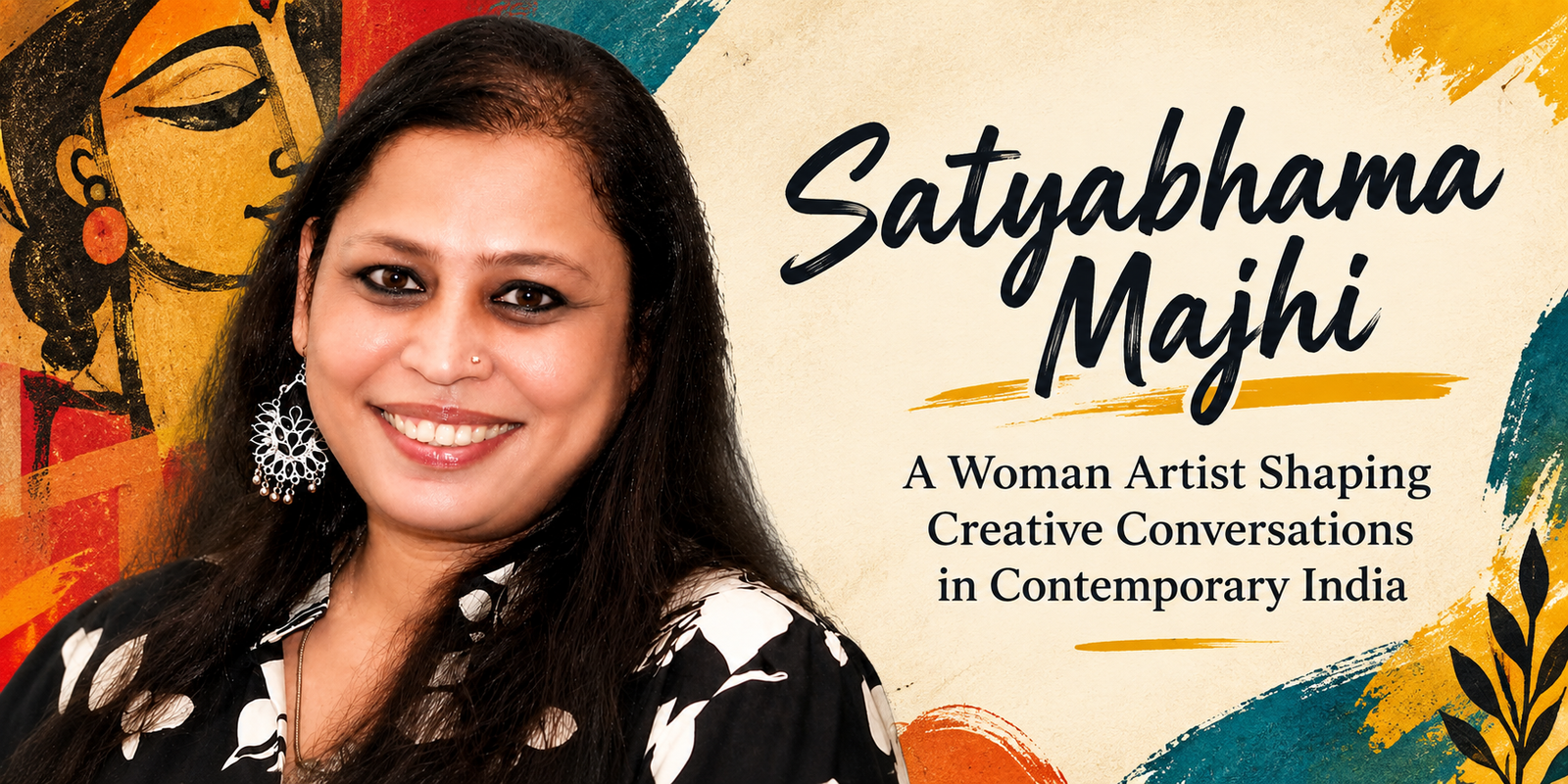
For many artists, the place where they grow up becomes an invisible part of their creative identity. Streets, neighbourhoods, people, sounds, markets and changing landscapes can remain in the imagination long after childhood has passed. For contemporary Indian artist Satyabhama Majhi, Bhubaneswar has played precisely this kind of role.
Based in Bhubaneswar, Odisha, Majhi has developed a multidisciplinary artistic practice that includes painting, sculpture, installation, photography, mixed media, public art and community-based projects. Her work frequently explores people, places, memory, cultural identity and environmental change. At the centre of much of this exploration is her relationship with the city and the everyday experiences that shaped her early understanding of the world.
A Childhood Surrounded by Everyday Life
Majhi’s artistic relationship with Bhubaneswar can be traced back to her childhood. One of the important experiences described in her artistic journey was observing everyday activities around her father’s shop in a local marketplace.
A marketplace is a constantly changing environment. Vendors arrive and leave, customers interact with shopkeepers, animals move through the streets, festivals alter the atmosphere and neighbourhood relationships develop through repeated encounters.
For a young observer, such an environment can become an informal education in human behaviour.
Majhi’s exposure to this setting encouraged her to notice details that might otherwise be overlooked. Ordinary people, their activities, relationships and surroundings became part of her visual memory.
These early observations would later become relevant to her artistic approach, in which everyday life frequently becomes a source of visual and conceptual exploration.
Seeing the City as More Than Buildings
Bhubaneswar is a city that has experienced substantial development and transformation. For Majhi, these changes provided an opportunity to think about what happens to people’s memories when their physical surroundings change.
A city is not simply made up of buildings, roads and infrastructure. It also contains personal histories, social relationships and shared memories.
A shop, street corner, marketplace or neighbourhood can hold memories for the people who have lived and worked there. When such spaces change or disappear, something intangible can also be lost.
This relationship between physical transformation and memory has become an important aspect of Majhi’s artistic thinking.
Her work encourages viewers to consider the human dimension of urban development and to recognise that modernization can change not only the appearance of a city but also the emotional relationship people have with it.
Everyday People as Subjects
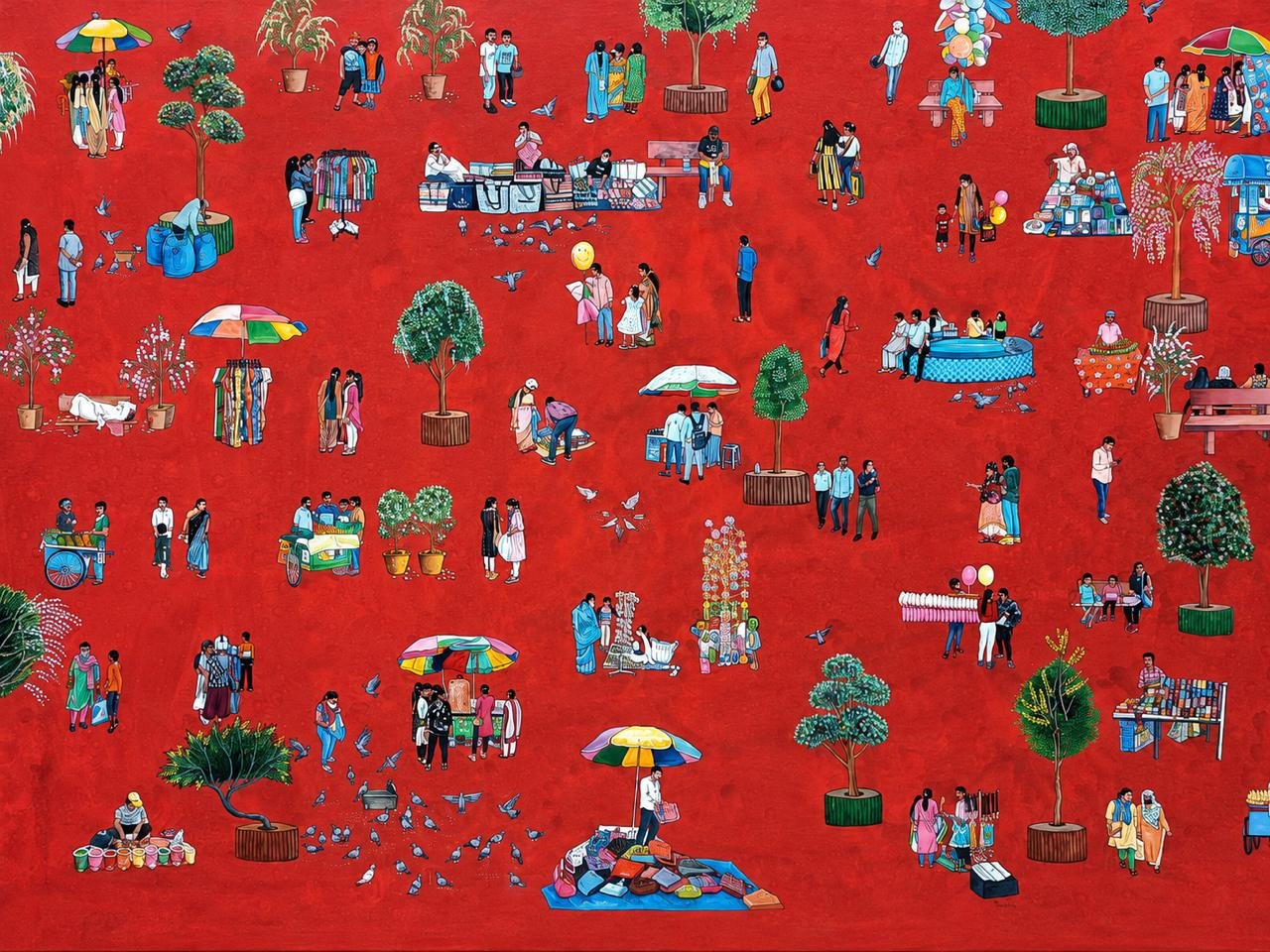
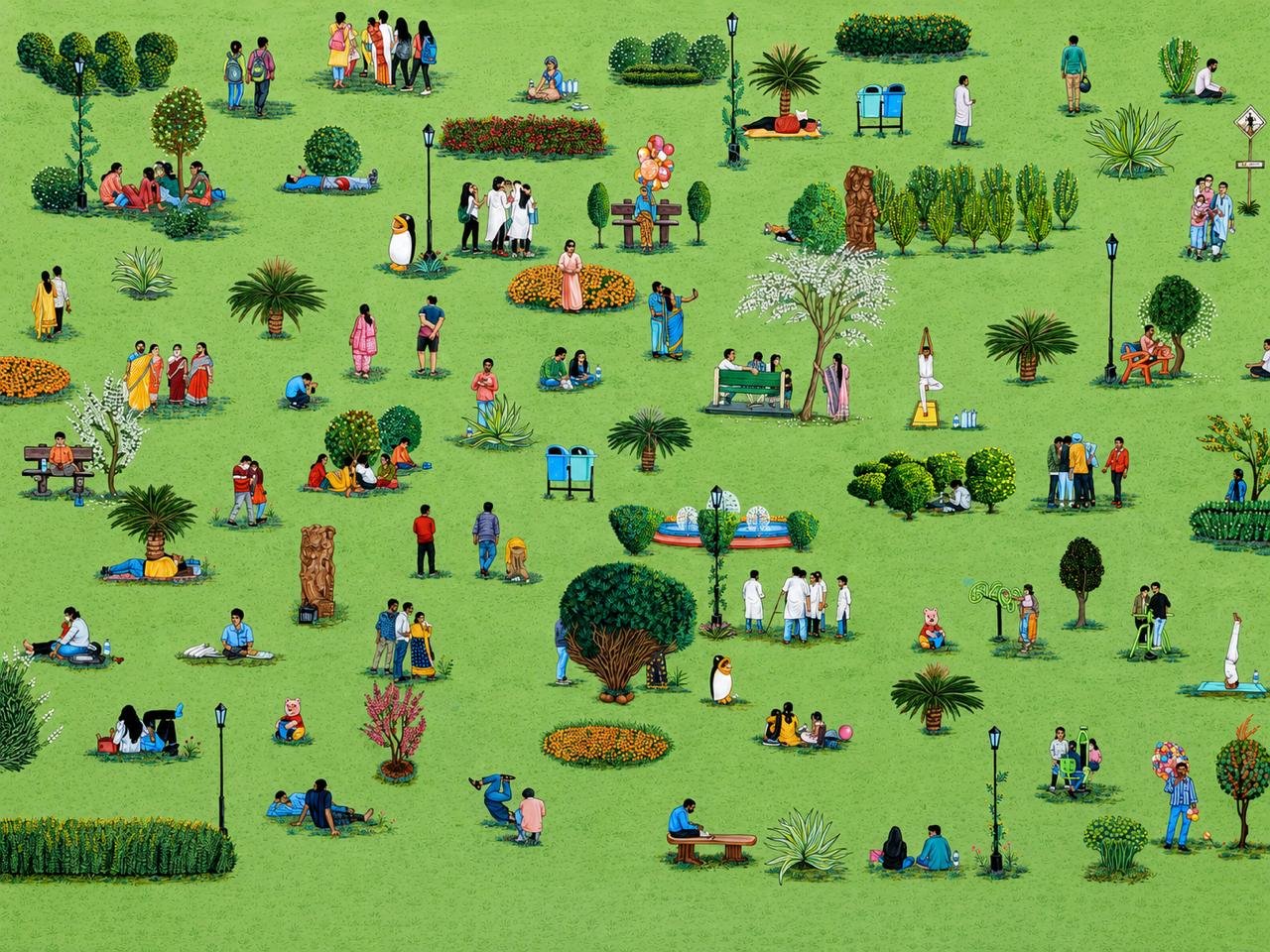
Majhi’s visual language often includes groups of people rather than concentrating exclusively on isolated individuals.
People, animals, vegetation, architecture and other elements of everyday environments can appear together within her compositions. This creates a sense of activity and movement.
The influence of marketplace life can be seen conceptually in this interest in collective environments.
Instead of asking viewers to look at one person alone, her works can encourage them to consider relationships between multiple figures and the spaces they occupy.
This approach transforms ordinary scenes into broader reflections on community life.
Memory and the Changing Environment
Memory is closely connected to place.
People often remember particular locations through sensory experiences: a familiar street, a marketplace, a tree, a building or a gathering place.
When these locations change, memories remain even when their physical surroundings do not.
Majhi’s experience of Bhubaneswar’s development has contributed to her interest in this relationship between memory and transformation.
Her artistic practice therefore considers not only what a place looks like but also what it means to the people who experience it.
This gives her work a social and emotional dimension.
From Urban Experience to Wider Cultural Questions
Although Bhubaneswar has been an important starting point, Majhi’s artistic practice has not remained limited to urban themes.
Her career gradually expanded toward rural and indigenous environments, including sustained engagement with the Dongaria Kondh community and the Niyamgiri hills.
This expansion is significant because it created a dialogue between two very different environments.
On one side is the urban landscape of Bhubaneswar, shaped by modernization and changing neighbourhoods. On the other is Niyamgiri, where landscape, indigenous culture, livelihood and ecological relationships are closely interconnected.
Majhi’s practice has explored both environments and the ways people relate to the places they inhabit.
From the City to the Hills
The movement from Bhubaneswar toward engagement with Niyamgiri did not represent a complete break from her earlier interests.
Instead, it extended her central questions.
In the city, she explored how people experience changing environments and preserve memories of places. Through her engagement with Niyamgiri, she encountered another form of relationship between people and landscape.
Her work with the Dongaria Kondh community has involved observation and interaction concerning cultural practices, livelihoods, indigenous visual traditions and relationships with nature.
The experience influenced her artistic exploration of landscape, culture and identity.
The Importance of Local Materials
Majhi’s engagement with Odisha’s cultural and environmental landscape has also influenced her approach to artistic materials.
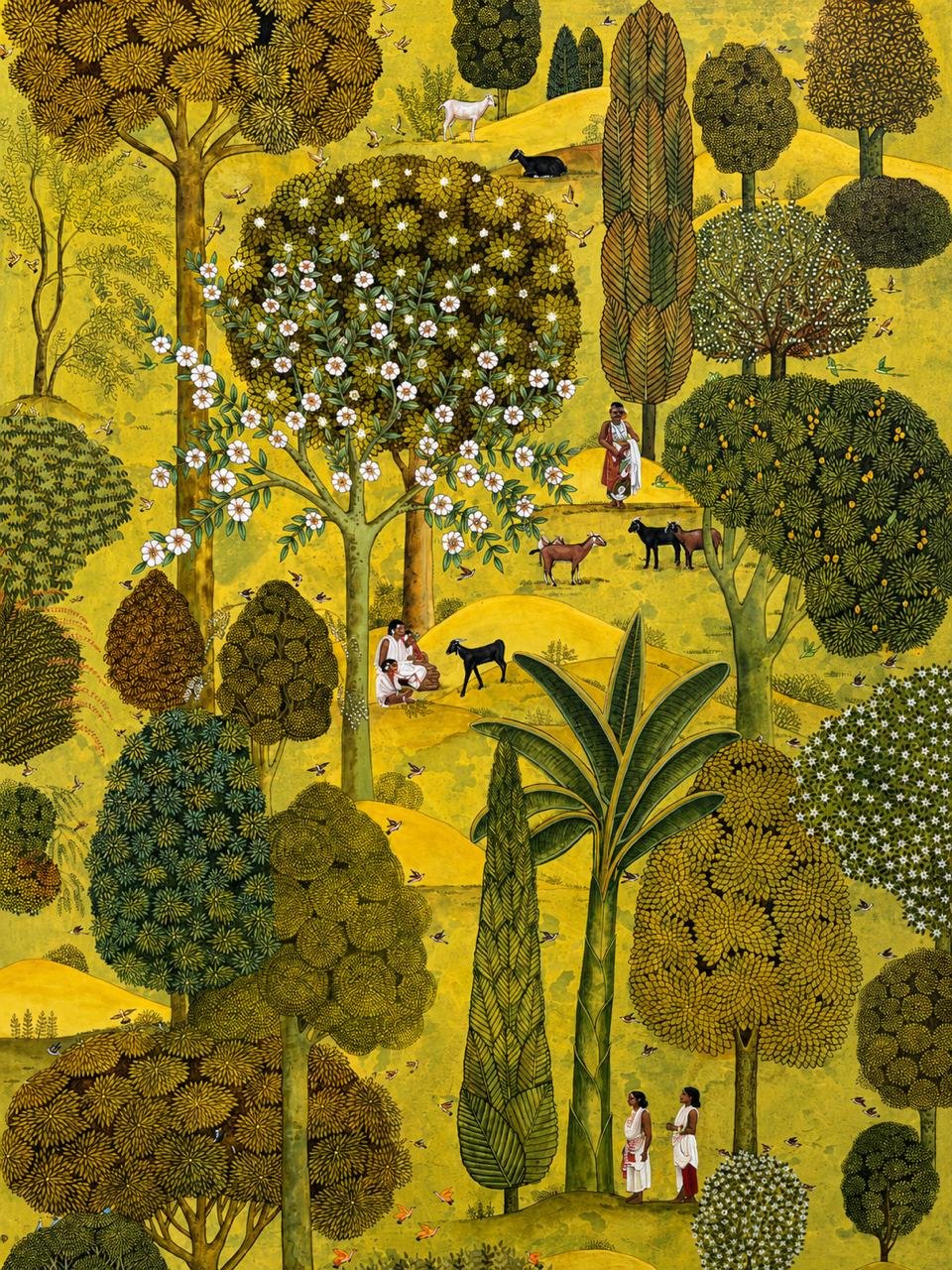
In connection with her exploration of Niyamgiri, she has experimented with naturally sourced materials such as chalk stone, charcoal, turmeric, geru soil and brown stone as sources of pigment.
This interest in natural materials can also be understood within the broader context of her connection to place.
When materials associated with a landscape become part of an artwork, the relationship between artist and environment becomes physical as well as conceptual.
The artwork does not merely depict nature; its material can also carry an association with the natural world.
Public Art in Bhubaneswar
Majhi’s connection with the city is also reflected in her engagement with public art.
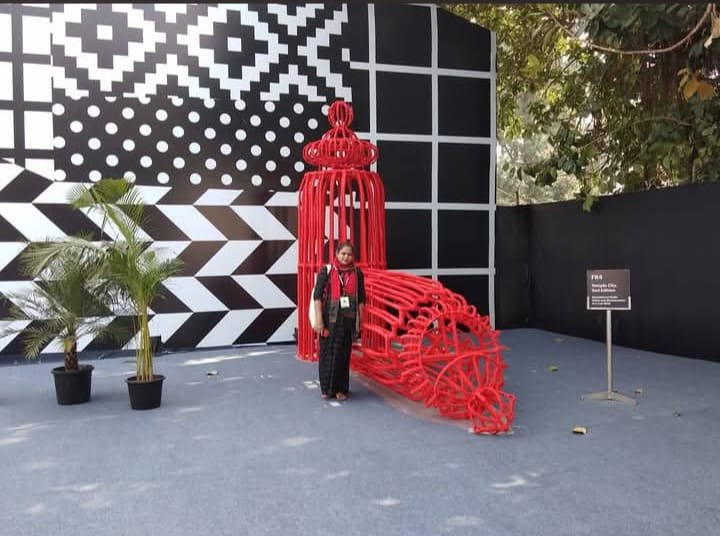
Her documented practice includes public-art initiatives and murals in Bhubaneswar and Cuttack.
Public art changes the relationship between an artwork and its audience. Instead of requiring people to enter a gallery, the artwork becomes part of the environment through which they move every day.
For an artist interested in community and everyday life, this can be particularly meaningful.
A public wall can become a shared visual space where artistic expression interacts with ordinary urban experience.
Art and Community
Community is one of the most important ideas connecting Majhi’s different artistic activities.
Her work has included community projects, public murals, educational workshops and sustained engagement with indigenous communities.
These activities reflect an understanding of art as something that can be created through interaction.
Her artistic identity consequently extends beyond that of a studio-based painter. She also functions as a facilitator, educator, curator and community practitioner.
This broader role is visible in her work with children and schools as well as her participation in public and collaborative art projects.
Bhubaneswar and Art Education
Majhi’s experience of observing everyday life has also informed her approach to working with children.
For approximately 15 years, she has participated in art education and creative-learning activities involving children and schools.
Her approach encourages children to draw inspiration from their own surroundings and memories.
Subjects such as trees, animals, household activities, festivals and village journeys can become starting points for creative expression.
In this way, the same principle that influenced Majhi’s own artistic development—careful observation of everyday life—can become a method of encouraging creativity among younger generations.
A City That Continues to Influence Her
Although Majhi’s career has expanded across Odisha and beyond, Bhubaneswar remains an important base for her practice.
Her artistic engagements have included exhibitions, workshops, public art and community initiatives, while her professional network has extended to institutions and projects outside the city.
Her documented engagements include Bharat Bhavan, Nature Morte, Lalit Kala Akademi, Odisha Lalit Kala Akademi, Bhubaneswar Art Trail, Gram Art Project and Vancouver Biennale-linked initiatives.
These experiences demonstrate how a local artistic identity can become part of a much wider contemporary art network.
From Local Observation to National Recognition
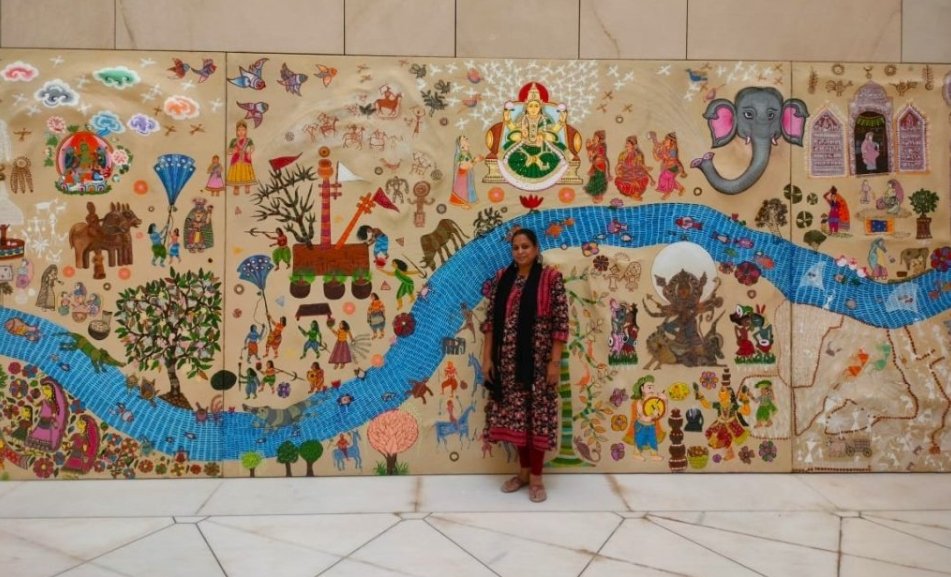
Majhi’s journey eventually reached a national platform through projects such as People’s Wall – Jan, Janani and Janmabhumi.
In 2023, she served as a Co-Sutradhar and creative contributor to the participatory art project created for the New Parliament House in New Delhi through the Lalit Kala Akademi.
The project brought together women artists and artisans from different parts of India.
Her involvement represented an important progression in her artistic journey: experiences rooted in a particular city and region could contribute to a large national cultural project.
Recognition of Her Artistic Journey
Majhi’s professional journey has also been recognised through major awards and opportunities.
She received the National Lalit Kala Akademi, New Delhi Scholarship for 2009–2010 and the Odisha Lalit Kala Akademi State Award in 2012.
These recognitions form important milestones in a career shaped by sustained artistic exploration and engagement with communities and cultural environments.
The Continuing Influence of Bhubaneswar
The influence of Bhubaneswar on Satyabhama Majhi’s work can ultimately be understood through the ideas that emerged from her early observations.
The city taught her to notice people, activities, relationships and changing surroundings. Those observations developed into larger artistic questions about memory, modernization, community and place.
Her later engagement with Niyamgiri and indigenous communities expanded those questions into the fields of ecology, cultural identity and traditional knowledge.
Yet the underlying concern remained similar: understanding the relationship between people and the environments they call home.
Conclusion
Satyabhama Majhi’s artistic journey demonstrates how a city can become a lifelong source of creative enquiry.
Bhubaneswar provided the early experiences that encouraged her to observe everyday life closely. Markets, people, neighbourhoods and changing urban spaces became part of her visual memory and helped shape her understanding of art.
Over time, these observations developed into a broader multidisciplinary practice involving painting, public art, education, community engagement and cultural exploration.
From Bhubaneswar’s urban landscape to the hills of Niyamgiri, Majhi has continued to explore the connections between people and place.
Her work suggests that cities and landscapes are not merely physical environments. They are repositories of memories, identities, relationships and stories.
By transforming these observations into contemporary artistic practice, Satyabhama Majhi demonstrates how local experience can become the foundation for a wider artistic conversation—one that connects Bhubaneswar with contemporary art, community, culture, memory and ecology.