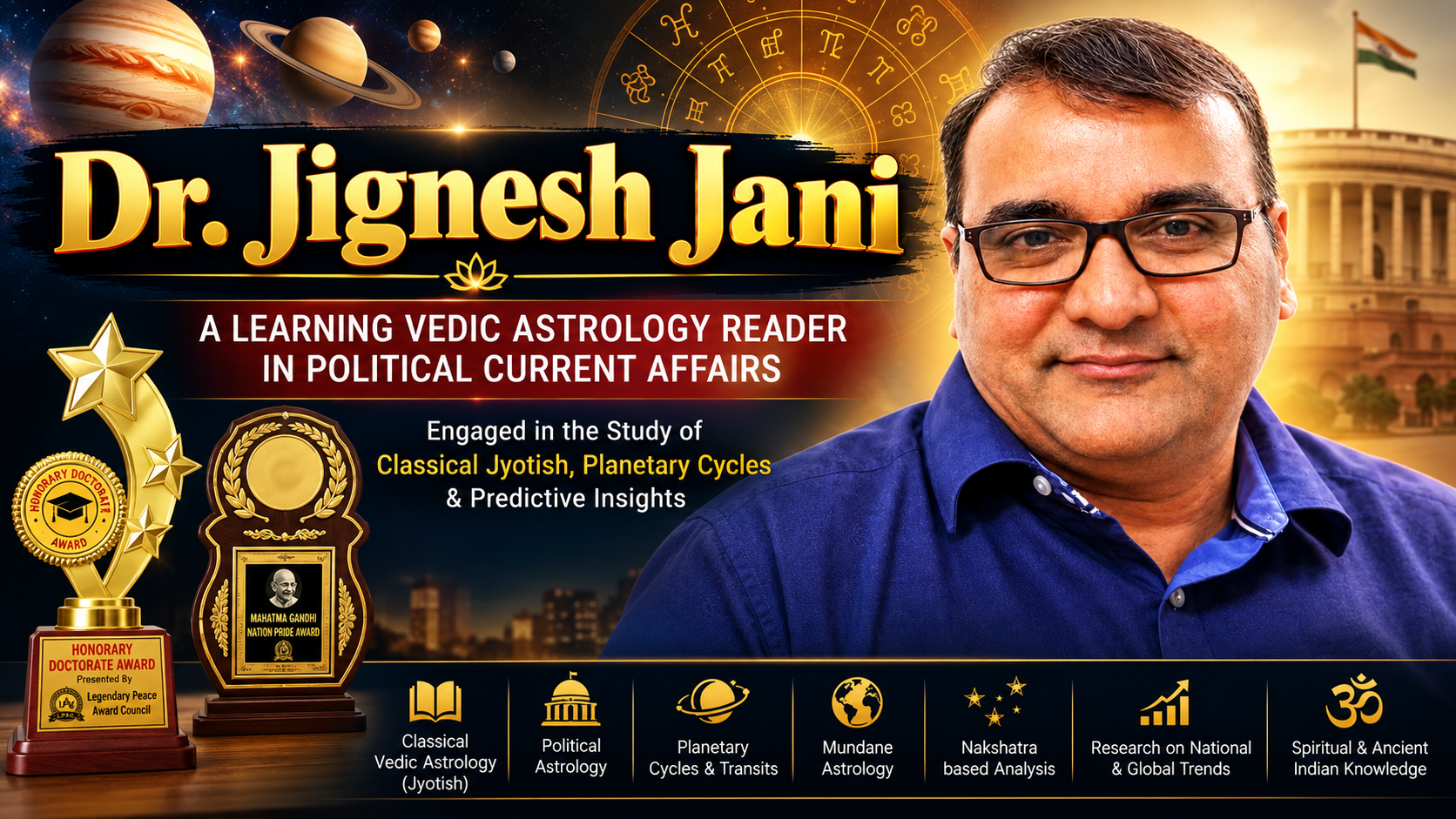
Ahmedabad | July 10, 2026: Vedic astrology researcher Jignesh Jani has shared his observations on the symbolic significance of current planetary alignments in relation to today’s international landscape. According to Jani, many practitioners of traditional Jyotish interpret ongoing planetary cycles as reflections of broader global trends, while emphasizing that astrology is not a scientifically established method for predicting geopolitical events or international outcomes.
Jani explained that Vedic astrology has traditionally been used to study planetary movements as symbolic representations of collective social and historical cycles. He noted that the current Mars–Rahu conjunction, commonly known as Angarak Yoga, is interpreted by many astrologers as representing assertive energy, strategic planning, military preparedness, and periods of heightened geopolitical attention. These interpretations, he said, are intended to encourage thoughtful reflection rather than forecast specific events.
He also highlighted the Saturn–Neptune alignment, which many astrological traditions associate with institutional restructuring, ideological transformation, policy evolution, and changing global alliances. According to Jani, such symbolic interpretations help explain why many astrologers consider the present period one of significant transition and long-term geopolitical change.
Jani further emphasized the traditional importance of Jupiter in Vedic astrology. Regarded as the planet of wisdom, ethics, justice, education, and diplomacy, Jupiter is viewed by many practitioners as encouraging balanced leadership, peaceful negotiations, and constructive international engagement during times of uncertainty.
Speaking about current world affairs, Jani noted that economic challenges, technological innovation, regional conflicts, climate concerns, and diplomatic initiatives are all shaping the international landscape. He reiterated that these developments arise from human decisions, public policy, economic conditions, and international cooperation rather than planetary positions themselves.
“Astrology provides symbolic perspectives on collective cycles, but it should never replace factual analysis or evidence-based decision-making,” Jani said. “The future depends on the wisdom of leaders, effective diplomacy, and the willingness of nations to work together in addressing shared global challenges.”
Concluding his remarks, Jani encouraged readers to appreciate Vedic astrology as an important part of India’s cultural heritage while maintaining a clear distinction between symbolic astrological interpretations and scientific geopolitical analysis. He expressed optimism that continued dialogue, cooperation, and responsible leadership will contribute to a more peaceful, stable, and prosperous world.