Every restaurant has a moment it fears the most—peak service hours. It is the time when orders flood in, tables are full, and expectations are at their highest. On paper, the kitchen is prepared. In reality, this is where many operations begin to fail.
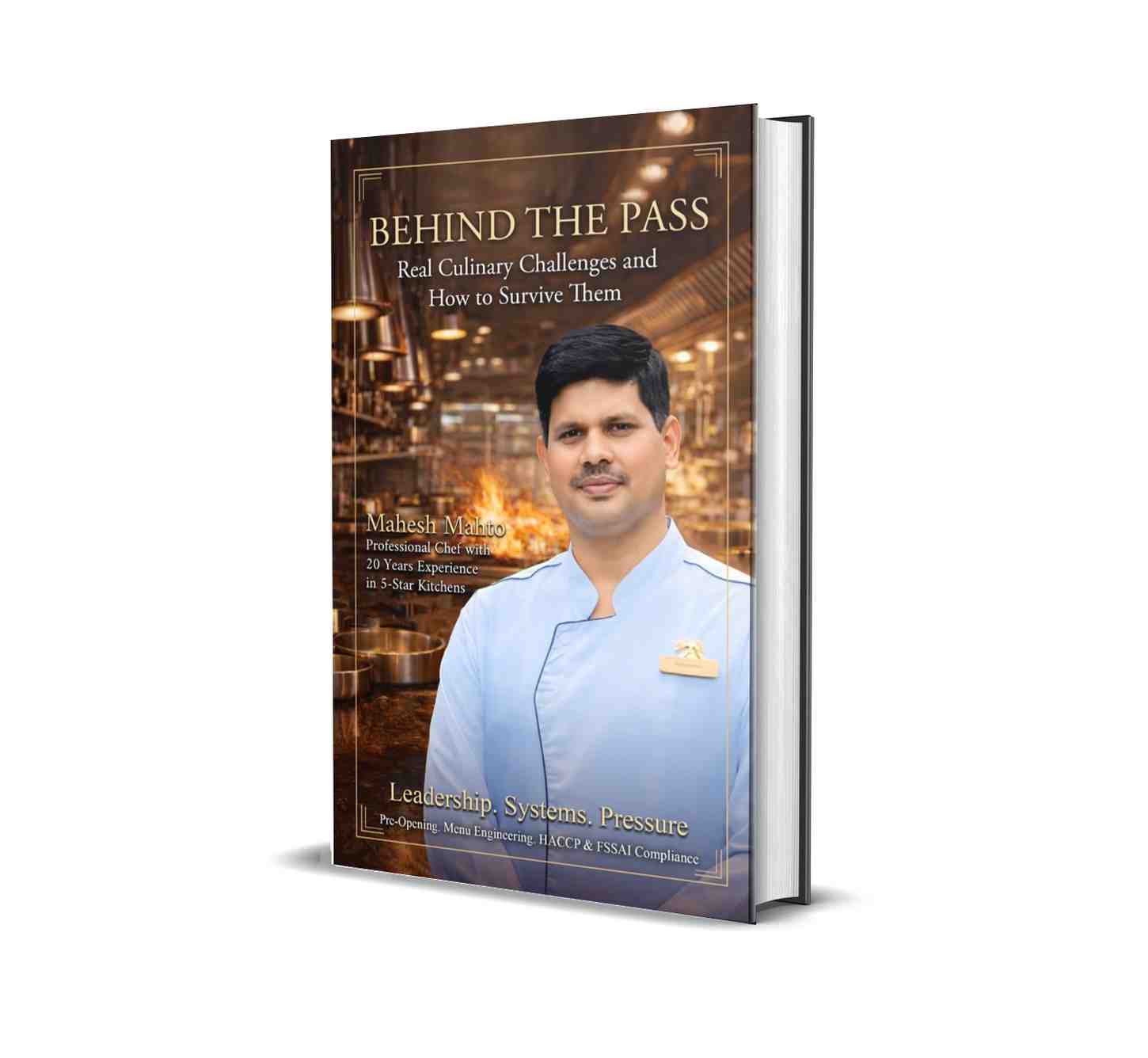
Chef Mahesh Mahto, a seasoned Executive Chef and systems-focused culinary expert, identifies peak service as the true test of any kitchen. It is not a test of cooking ability alone, but of structure, communication, and discipline.

The Chain Reaction of Small Errors
Kitchens rarely collapse because of one major mistake. Instead, they fail through a series of small, unnoticed issues:
- A prep station running late
- An order ticket misread
- A missing ingredient not communicated
- A new staff member unsure of timing
Individually, these seem minor. But during peak hours, they accumulate quickly and disrupt the entire service flow.
Chef Mahto explains that kitchens often underestimate how fragile their systems are under pressure.
Communication Breakdown
One of the most common failure points is communication. In busy kitchens, verbal instructions become rushed, unclear, or incomplete. Orders are shouted across stations, and important details get lost in noise.
Without structured communication methods, misunderstandings increase. A wrong dish sent to the pass or delayed preparation can affect multiple tables at once.
Strong kitchens solve this with clear hierarchy and defined communication protocols, ensuring that every instruction has a purpose and direction.
Lack of Standardization
Another major issue is inconsistency in processes. When different chefs prepare the same dish in different ways, service becomes unpredictable. During peak hours, there is no time for correction or adjustment.
Standardization ensures that every dish follows the same method regardless of who is cooking. This reduces dependency on individual memory and ensures reliability.
Chef Mahto strongly emphasizes that without standard operating procedures, kitchens operate on assumption rather than control.
Overloading of Key Staff
In many kitchens, experienced chefs end up carrying most of the workload during rush hours. While this may seem efficient, it creates a dangerous dependency.
When one person becomes overloaded, speed drops, mistakes increase, and stress spreads across the team.
A well-structured kitchen distributes responsibility evenly, ensuring that no single individual becomes a bottleneck.
Environmental Pressure
Heat, noise, time pressure, and physical exhaustion all contribute to reduced performance. Kitchens are intense environments where cognitive clarity is constantly challenged.
Chef Mahto points out that systems should be designed to reduce mental load, not increase it. This includes pre-preparation planning, clear station setup, and simplified workflows.
The Recovery Factor
Interestingly, the difference between failing kitchens and successful ones is not that they avoid mistakes—it is how quickly they recover from them.
Strong kitchens:
- Identify issues immediately
- Communicate corrections quickly
- Reorganize workflow on the spot
- Maintain calm leadership during chaos
Weak kitchens often escalate panic, making recovery slower and more difficult.

Conclusion
Peak service hours reveal the true strength of a kitchen. They expose weaknesses that are invisible during normal operations. According to Chef Mahesh Mahto, the solution is not working harder, but building systems that can withstand pressure.
When structure is strong, even the busiest service becomes manageable. When it is weak, even simple orders can turn into operational breakdowns.
Media Coverage & External Links
Read the full feature:
Interview:
Also featured in The Literature Times:
Get Your Copy
The pass is open.
- Amazon — https://lnkd.in/gh__9vkJ
- Flipkart — https://lnkd.in/gVcFjHTa
- Astitva Store — https://lnkd.in/gpmc_vpp
- Classic Shelf — https://lnkd.in/g7_k4TpW